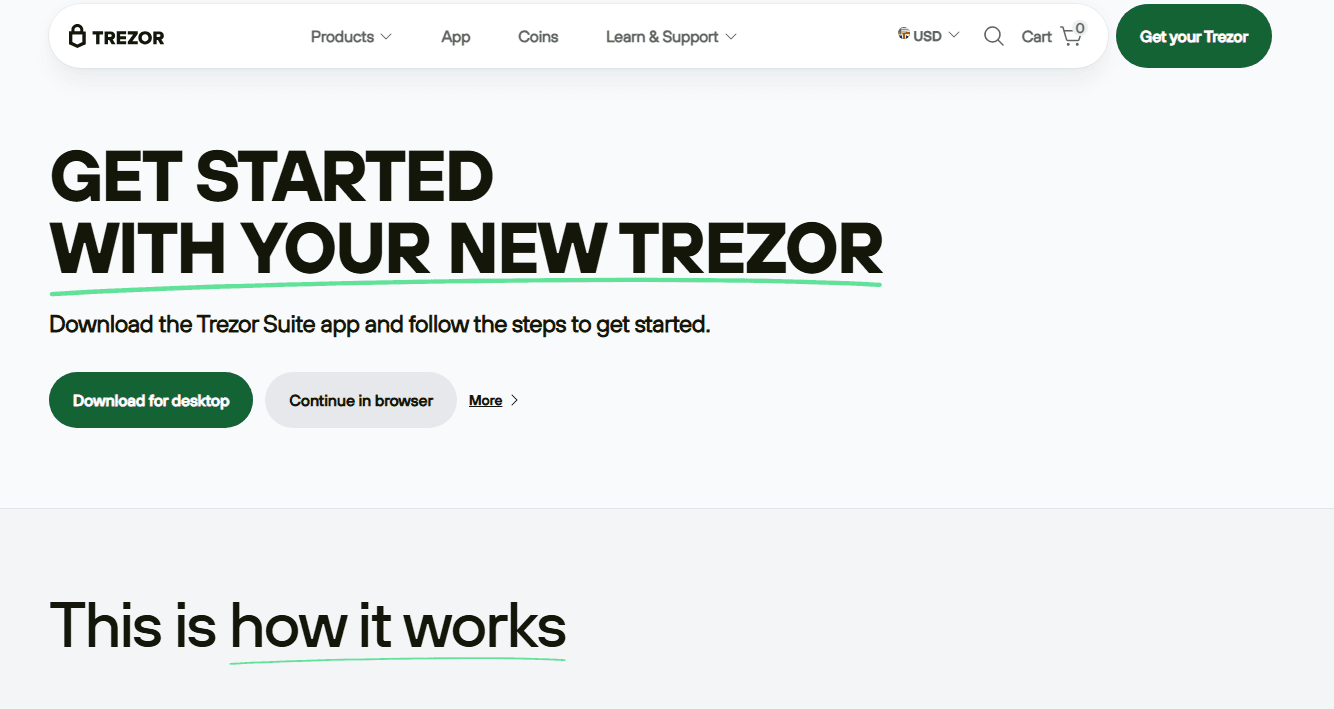
Trezor.io/Start – Complete Setup Guide
Introduction to Trezor Hardware Wallet
A Trezor hardware wallet is one of the most secure methods to store digital assets, including cryptocurrencies like Bitcoin, Ethereum, and other supported coins. It keeps private keys offline, protecting them from malware, phishing, and online hacks. To begin using your Trezor device, you must initialize it through trezor.io/start, the official onboarding page. This guide will walk you step-by-step through the setup process, security best practices, backup procedures, and device usage tips.
Step 1: Unbox and Verify Your Trezor
Start by unboxing your Trezor device. Trezor packaging includes a hologram seal to ensure that the box has not been opened or tampered with. Inside you will find:
Trezor device (Model One or Model T)
USB cable
Recovery seed cards
User instructions
If you see any sign of tampering, contact Trezor support immediately and do not use the device.
Step 2: Visit the Official Website
Open your web browser and go to:
trezor.io/start
Make sure the URL is spelled and formatted exactly like this and begins with https://. This page provides the correct software download and ensures that you are interacting with the official Trezor ecosystem. Avoid third-party links.
Step 3: Install Trezor Suite
Trezor Suite is the official desktop and web app used to manage your crypto wallet. On the webpage:
Download Trezor Suite for Windows, macOS, or Linux.
Install the file provided.
Launch the Trezor Suite application.
The desktop version is recommended for maximum protection and privacy compared to browser extensions.
Step 4: Connect Your Device
Plug the Trezor wallet into your computer using the provided USB cable. Trezor Suite will automatically detect the device and guide you through the next steps.
If you are setting up a brand-new device, the software will prompt you to create a new wallet. If you already have a wallet and need restoration, select “Recover Wallet.”
Step 5: Install Firmware
New Trezor devices are shipped without firmware for security reasons. When prompted:
Confirm firmware installation on the device screen.
Wait until the update completes.
Do not disconnect the device during this process.
Step 6: Create Your Wallet
After firmware is installed:
Select Create New Wallet in Trezor Suite.
Follow the prompts to set up your secure wallet environment.
This wallet is where your private keys will be generated and stored inside the hardware, never leaving the device.
Step 7: Write Down Your Recovery Seed
Your Trezor device will now display your Recovery Seed — a 12, 18, or 24-word phrase. This is the most critical step in the entire setup.
You must write the seed down on paper (Trezor includes special cards for this). Do not:
Take photos of the seed
Store it on a phone or computer
Upload it to online storage
Share it with anyone
Your seed is the only way to recover your crypto funds if the device is lost, broken, or stolen.
Double-check for accuracy and keep the card in a secure location like a safe.
Step 8: Create a Strong PIN
A PIN prevents unauthorized access to the device if someone physically obtains it. Select a unique PIN code not related to personal dates or easy sequences like “1234.”
Every time the PIN is entered incorrectly, the waiting time increases, making brute-force attacks impractical.
Step 9: Access Your Crypto Portfolio
Once your wallet and PIN are successfully set up, you can begin managing cryptocurrencies:
Add coin accounts within Trezor Suite.
Buy, receive, and send supported coins.
Monitor your portfolio securely.
To receive crypto, generate a receiving address and verify it on the device screen to avoid tampering.
To send crypto, confirm all transaction details directly on the Trezor device — an essential security step.
Security Best Practices
To maximize protection:
Always verify addresses on the Trezor display before sending.
Keep firmware updated through the official Suite.
Never enter your seed words into any website or computer.
Use passphrase protection for an extra security layer.
Beware of phishing attempts — scammers often imitate crypto services.
If anyone asks for your recovery seed, it is a scam.
Backup and Recovery
If your device is ever lost or damaged, you can restore your wallet on:
Another Trezor device, or
Any BIP39-compatible hardware wallet
Restoring requires your exact seed phrase in correct order, so storing it securely is essential.
You can also use Shamir Backup (available on Trezor Model T) to split your recovery seed into multiple shares for higher-level protection.
Why Trezor is Trusted
Trezor is known for:
True offline key storage
Open-source security
Transparent operation and UI confirmations
Extensive cryptocurrency support
It puts users in full control of their funds without relying on centralized entities or online systems.
Conclusion
Trezor hardware wallets offer a powerful and secure way to store digital wealth. By carefully following the setup process at trezor.io/start, writing down and safeguarding your recovery seed, and using Trezor Suite for all interactions, you significantly reduce your exposure to cyber threats. With proper maintenance and awareness, your crypto assets remain safe and accessible only to you.