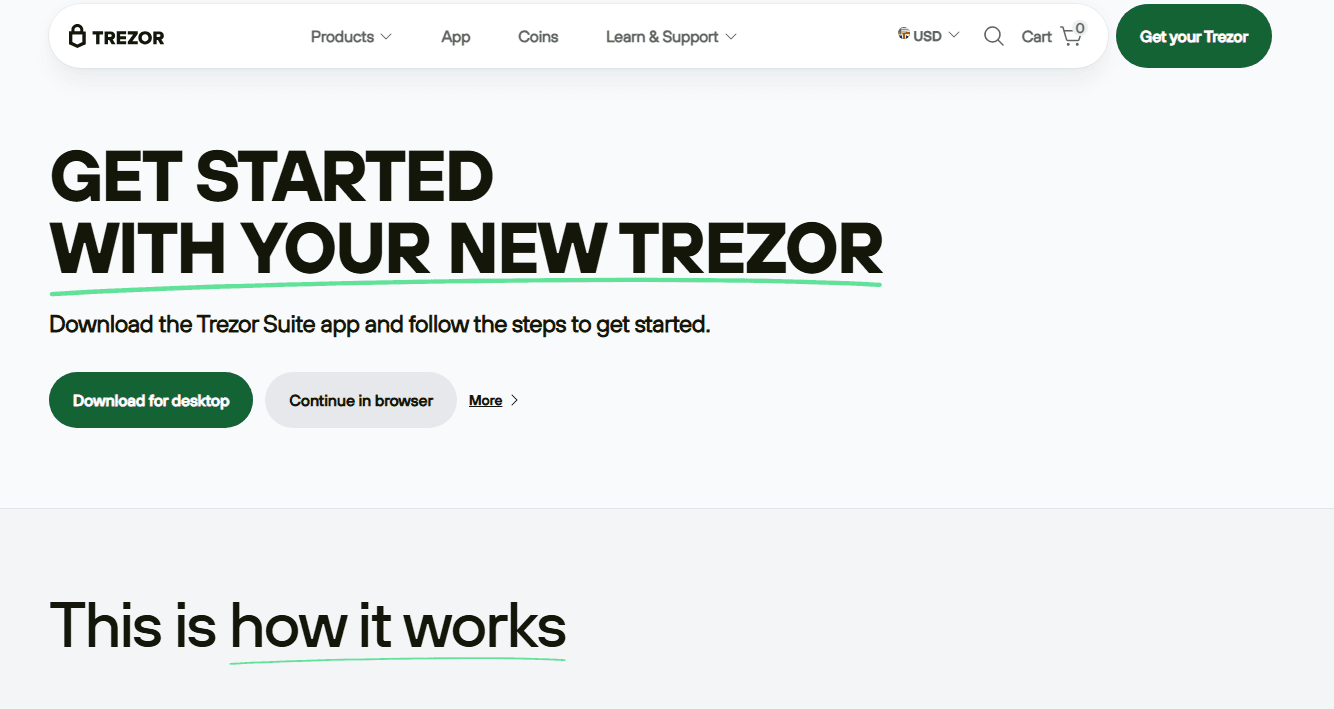
Trezor.io/Start – Official Trezor Setup Guide for Secure Crypto Storage
Introduction
Trezor is one of the most trusted hardware wallets designed to store and manage cryptocurrencies with maximum security. Unlike online or software wallets, Trezor keeps your private keys offline, making it almost impossible for hackers to access your funds remotely. To begin using a Trezor Model One or Trezor Model T, all setup steps must be completed through trezor.io/start, the official onboarding page. This guide explains how to properly initialize your device, create backups, and manage crypto safely.
What You Need Before Starting
Make sure you have the following:
A new Trezor hardware wallet
A stable internet connection
Trezor Suite installed from the official website
Recovery seed cards provided in the box
Never buy a used hardware wallet. Always purchase directly from Trezor or an authorized retailer to avoid device tampering.
Step 1: Inspect Your Trezor Hardware
When you open your Trezor package, check for:
A sealed hologram sticker
No visible damage or scratches
All original accessories inside
If you suspect manipulation or replacement parts, stop and contact Trezor support. Physical security is the first defense layer.
Step 2: Visit Official Trezor.io/Start
Launch your computer browser and enter:
trezor.io/start
Confirm that:
The address begins with https://
The spelling is correct — no extra letters, symbols, or cloned pages
This webpage ensures secure downloads and helps prevent phishing attacks. Avoid downloading wallet tools from other websites or third-party blogs.
Step 3: Download and Install Trezor Suite
Select the operating system for your device — Windows, macOS, or Linux — and download Trezor Suite, the official management application.
Trezor Suite features include:
Sending and receiving crypto
Managing multiple accounts
Monitoring portfolio value
Checking transaction history
Once installed, open the app and keep it ready for pairing.
Step 4: Connect Your Trezor Device
Use the included USB cable to plug your wallet into your computer. Trezor Suite will detect the hardware immediately and prompt you to begin setup.
If this is the first time using the wallet, choose “Create New Wallet”. If you previously owned a Trezor and need to restore funds, select “Recover Wallet” and follow the instructions.
Step 5: Install Latest Firmware
Brand-new Trezor devices do not contain firmware by default to ensure they are not pre-configured. Trezor Suite will automatically ask you to install the newest secure firmware.
Approve the installation on the device’s screen
Wait until the process is 100% completed
Do not disconnect the USB cable during updates
Firmware enhancements include new features and protection fixes — always stay up-to-date.
Step 6: Generate a New Wallet
Once firmware setup is done, click “Create New Wallet” inside Trezor Suite. Your private keys are generated offline inside the secure element of the hardware device and will never be visible to the internet.
This step activates your wallet but does not yet back it up — next comes the most important part.
Step 7: Backup Your Recovery Seed
Your Trezor wallet will show a 12-word, 18-word, or 24-word recovery phrase. Carefully write this down by hand on the included recovery seed cards.
Important Security Rules:
❌ Do NOT take a photo of the seed
❌ Do NOT save it in phone notes or cloud storage
❌ Do NOT share it with anyone
❌ Do NOT re-type it on any website
✔ Write clearly
✔ Triple-check spelling
✔ Store in a secure location like a fire-safe box
Your recovery seed is the master key to your wallet. If the device is stolen, destroyed, or lost — this seed is the only way to recover your assets.
Step 8: Create a Strong PIN
Set a unique PIN code that you will enter every time you unlock your wallet. The device screen will help you confirm numbers in a randomized matrix pattern to prevent spying.
Using a predictable PIN like 0000 or 123456 is extremely risky. Choose a long, hard-to-guess combination.
Step 9: Add Crypto Accounts and Start Managing Coins
Now that setup is complete, you can:
Add accounts for supported coins (Bitcoin, Ethereum, ERC-20 tokens, etc.)
Send and receive assets
View your real-time portfolio
🚨 Always verify receiving addresses directly on your Trezor screen before confirming any transaction. This protects you from clipboard-editing malware.
Security Best Practices for Trezor Users
To protect your digital wealth long-term:
Always verify transactions on the hardware screen
Keep your recovery seed hidden from others
Enable optional passphrase protection for extra defense
Regularly update Trezor Suite and firmware
Beware of websites or people asking for your seed
No legitimate platform will ever request your recovery phrase.
Backup & Restore Options
If misfortune strikes — such as theft or damage — you can restore your wallet using your seed on:
A new Trezor device
Compatible hardware wallets using standard BIP39
If you lose both the device and the recovery seed, funds become unrecoverable — so backup security is essential.
Advanced users may choose Shamir Backup (Model T feature) to divide the recovery seed into multiple encrypted parts.
Conclusion
Trezor provides one of the safest environments to protect and control cryptocurrencies without relying on centralized services. By correctly completing the setup process through trezor.io/start, creating secure backups, and following best practices, you maintain full ownership and security of your digital assets.