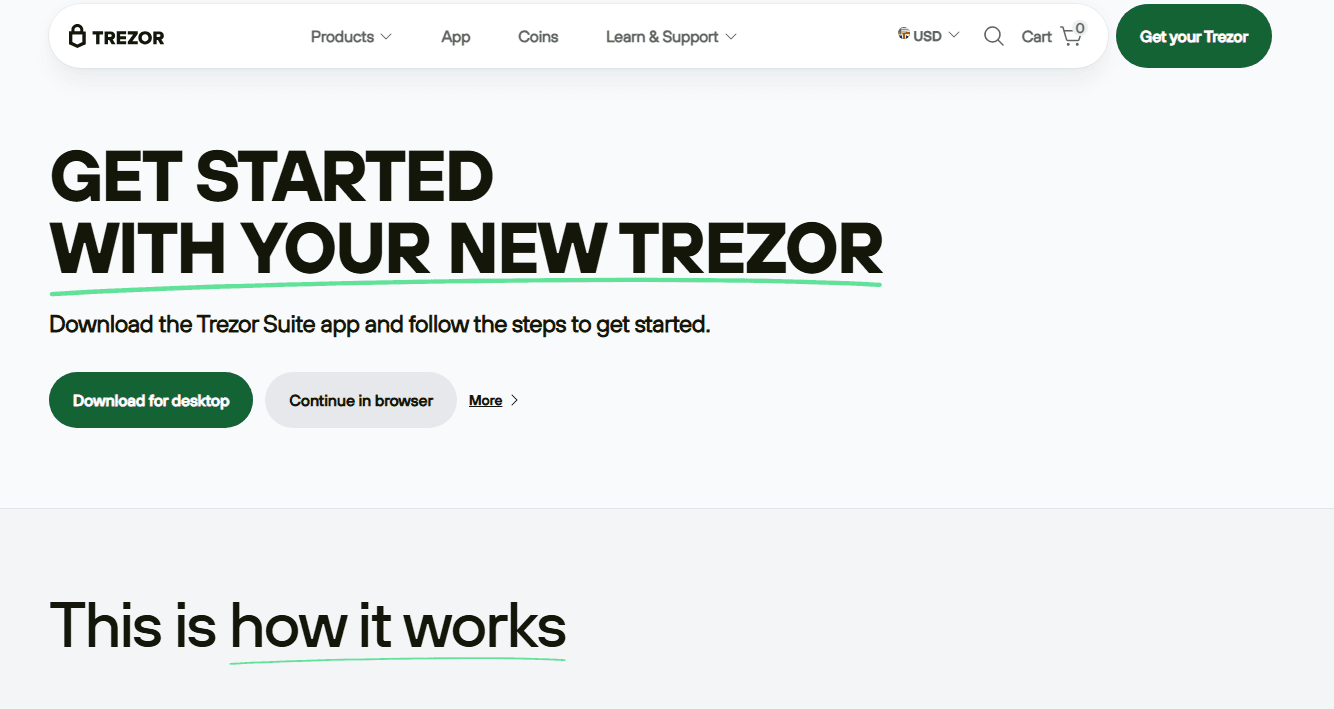
Trezor.io/Start – Beginner Guide to Setting Up Your Trezor Hardware Wallet
Why Use Trezor for Crypto Protection?
Cryptocurrencies give users full control over their finances, but that control also comes with responsibility. Storing coins on exchanges leaves them vulnerable to hacks, platform failures, and phishing attacks. A Trezor hardware wallet solves this problem by keeping private keys offline and fully secured inside a physical device. Through trezor.io/start, users can set up their wallet safely and start managing crypto with confidence.
Getting Started: What Comes in the Box
Inside your Trezor Model One or Trezor Model T package, you will typically find:
The hardware wallet device
USB connection cable
Recovery seed cards
Instruction materials and stickers
Before moving forward, check that everything is properly sealed. The holographic label on the package ensures it has not been tampered with. If anything appears suspicious, contact the manufacturer and do not plug it in.
Step 1: Go to Official Trezor Start Page
Open your computer browser and carefully type:
trezor.io/start
Only trust this exact site. Fake versions of the page may exist online, attempting to steal crypto credentials. Always confirm the domain spelling and secure https lock symbol in the address bar.
This official start page directs you to download trusted tools needed for configuration.
Step 2: Install Trezor Suite Software
To manage your hardware wallet, Trezor Suite must be installed on your computer. This application performs secure actions such as:
Viewing account balances
Sending crypto transactions
Checking your portfolio performance
Enabling advanced security settings
Choose the download for Windows, macOS, or Linux, and complete installation. The desktop version provides maximum privacy and the highest security level.
Step 3: Connect the Trezor Wallet to Your Computer
After installing Trezor Suite, connect your device using the provided USB cable. The software will automatically detect it and display setup options. If it’s your first time using the device, select Create Wallet to continue.
Users who already own a recovery seed can select Recover Wallet to restore their existing crypto accounts.
Step 4: Update or Install Firmware
All new Trezor devices require firmware installation before use. Firmware acts as the device’s internal operating system and is vital for wallet protection. Follow the on-screen instructions to approve the installation.
⚠️ Do not disconnect the device while firmware is updating.
Trezor frequently releases firmware upgrades to enhance security functions and add support for new cryptocurrencies, so plan to update regularly.
Step 5: Create a Wallet and Backup Your Seed
Once firmware is ready, select Create New Wallet. During this process, the Trezor screen will generate a recovery seed phrase — usually 12, 18, or 24 words.
These words form the one and only backup of your wallet. Here’s how to protect them:
✔ Write the words clearly on the provided cards
✔ Store the backup in a private, secure location
✔ Consider keeping copies in different hidden places
🚫 Never photograph the seed
🚫 Never store it online or in cloud services
🚫 Never enter the seed into websites or apps
Anyone who sees your recovery words can control your crypto — no password required.
Step 6: Set a PIN for Device Protection
Next, you will create a custom PIN that must be entered every time you access the wallet. This simple layer blocks unauthorized use if someone gets physical access to your Trezor.
Avoid predictable choices like:
1234
0000
Birthdays or personal info
Make it unique and difficult to guess. PIN strength is crucial for physical wallet security.
Step 7: Add Coins and Start Using Trezor Suite
Your wallet is now active. Inside Trezor Suite, you can add accounts for supported cryptocurrencies such as Bitcoin, Ethereum, and many popular tokens.
Main functions include:
Receive crypto: Generate a receiving address and verify it on the hardware screen before sharing.
Send crypto: Confirm recipient address and amount directly on the device.
Monitor assets: Track growth, prices, and portfolio data privately.
Everything is validated on the device screen to prevent malware interference.
Bonus Security Features You Should Enable
To improve protection further, consider enabling:
FeatureBenefitPassphrase ProtectionAdds an extra unlock layer beyond the seedShamir Backup (Model T)Splits recovery into multiple secured sharesCoin locking + Address labelingBetter asset organizationAdvanced firmware optionsExtra control and security protocols
Trezor is designed for long-term digital wealth protection, so using these features is highly recommended.
Recovering Wallet Access If Something Happens
If your device is lost or damaged, your funds are still safe as long as your recovery seed is secure. You can restore access using:
Another Trezor hardware wallet, or
Any wallet compatible with BIP39 backup standards
If both the device and the seed are lost, there is no way to recover funds — so backup storage must be taken seriously.
Final Thoughts
Setting up a hardware wallet through trezor.io/start is the safest approach for anyone holding crypto assets. With full offline key storage, secure transaction confirmation, and regular firmware updates, Trezor ensures total control and peace of mind.